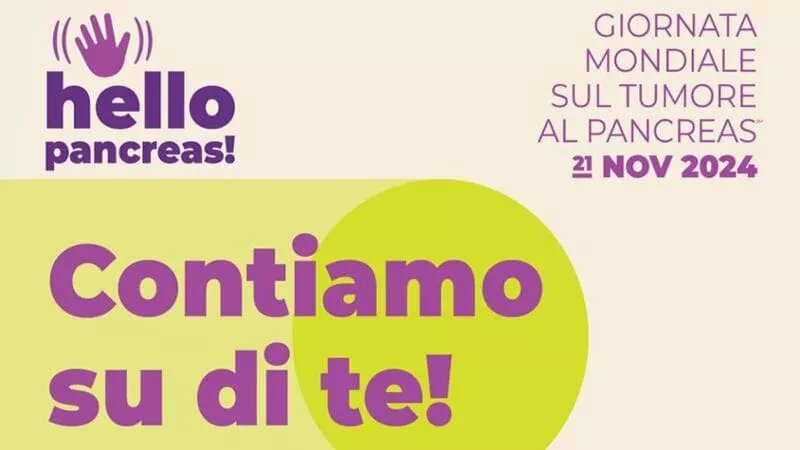
The goal is to focus attention on a neoplasm that is difficult to diagnose and complex to treat, currently the third leading cause of cancer death in the world, and destined to become the second by 2030. The doctors and researchers of AISP are engaged in many studies, supported by the ongoing commitment and generosity of patient associations. These studies aim to identify people at increased genetic risk of pancreatic cancer, to be monitored through surveillance programs, and to evaluate quality indicators in oncology, as well as to improve existing treatments. "We at AISP are on the front lines when it comes to research, which we can conduct thanks to the patient associations that support us," says Prof. Claudio Ricci, surgeon at the Sant'Orsola Polyclinic in Bologna, AISP secretary. November is the perfect time to focus attention on this small but essential organ and on related fundraising: in fact, it is a month that, in addition to being rich in scientific and educational events linked to individual hospital realities, offers fundraising moments such as the city run, in Desio on November 17, whose proceeds will go entirely to AISP, and other initiatives organized by Patient Associations such as November 17 in Rimini and Brescia and November 24 in Novara (further information on AISP social members). Despite the prognosis often being poor, the first improvements compared to a few years ago are beginning to be seen, precisely thanks to research and the awareness of institutions that this disease must be tackled by identifying reference centers in each region to guarantee patients equity in care and access to highly specialized centers and, last but not least, to the NETWORK built over time among doctors, researchers, politics, institutions, local realities, and patient associations. This year's global campaign aims to focus attention on strong concepts such as: greater attention, awareness, progress, and hope. To enhance these concepts and achieve ever earlier diagnoses and greater treatment opportunities, AISP and Patient Associations join together to say "Hellopancreas!" not only in November but every day of the year!
Silvia Carrara, Gastroenterologist at the Humanitas Clinical Institute and President of the Italian Pancreas Study Association (AISP), emphasizes the importance of spreading a culture of prevention and greater awareness of pancreatic diseases: "We need to raise awareness among everyone, not just the population and institutions but also doctors. It is essential to pay attention to the onset of certain symptoms, such as jaundice, back pain, or diabetes that is no longer responsive to therapy or newly onset. Underestimating symptoms can lead to a late diagnosis; it is important that the patient enters a diagnostic and treatment pathway as quickly as possible."
REGISTERED OFFICE AND PHONE
E-MAIL AND PEC
SOCIAL






Via Maestri del Lavoro 5
Pescara
65125
2018-2023 © All rights reserved
C.F. 91145270681
World Pancreatic Cancer Day: the commitment of AISP and Patient Associations
World Pancreatic Cancer Day: the commitment of AISP and Patient Associations
2025-11-05 09:30
2025-11-05 09:30
Array() no author 88942
REGISTERED OFFICE AND PHONE
E-MAIL AND PEC
SOCIAL
Via Maestri del Lavoro 5
Pescara
65125
2018-2023 © All rights reserved
C.F. 91145270681