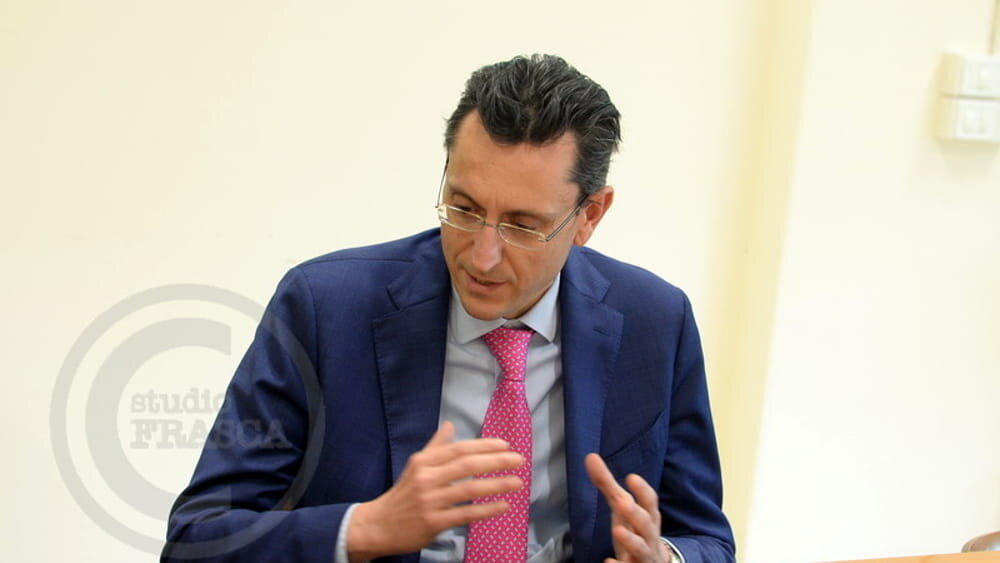
IN-DEPTH ANALYSIS - Pancreatic cancer is one of the most insidious oncological diseases. We discussed it with Giorgio Ercolani, director of Surgery and Advanced Oncological Therapies in Forlì Giorgio Ercolani, director of Surgery and Advanced Oncological Therapies in Forlì and full professor of Surgery at the University of Bologna, you are one of the leading experts in hepato-bilio-pancreatic oncological surgery. How many cases do you treat annually in the Forlì area? The average age? What are the symptoms with which it manifests? What causes it? Is it a type of tumor on the rise? Why, unlike other cancers, is pancreatic cancer the most lethal? What is the role of surgery against this cancer? So, is chemotherapy also administered before surgery for the pancreas? What are the survival expectations? Last November, a meeting was held in Forlì at the Town Hall, aimed at specialists in the field and the community. What needs are still unrecognized, or not yet met, by the care network? What can institutions do?
A silent tumor, hard to defeat. It presents with fatigue, pain radiating from the abdomen to the back, and yellowing of the eyes and skin. A tough opponent to beat, even with a tackle. Gianluca Vialli tried, when in 2017 he began a forced coexistence with the disease, pancreatic adenocarcinoma. But unfortunately, that form of cancer, which attacked the pancreas, won its challenge. A battle that the former footballer of Sampdoria, Juventus, and Chelsea, later an added value to Roberto Mancini's National Team that made us rejoice in 2021 with the European Championship victory, fought with his head held high until the end. Pancreatic cancer is one of the most insidious oncological diseases, a pathology with increasing incidence and for which there are still few certainties regarding treatment.
"We treat about 120-140 cases in our field and perform about 50-60 pancreatic resections per year in Forlì (that is, removal of part or all of the gland, ed.). Only 30-35% of patients with pancreatic adenocarcinoma are operable at the time of diagnosis."
"The peak incidence is between the sixth and seventh decade."
"Tumors of the pancreas located at the head often begin with jaundice (due to hyperbilirubinemia), alteration of biochemical indices, particularly those of cholestasis (gamma-Gt, total and direct bilirubin), dark urine, and pale stools. Those located in the body or tail of the pancreas unfortunately often begin with pain and weight loss when the neoplasm has already reached considerable size. And often in these cases, it is no longer operable."
"There is no triggering factor. There are some risk factors such as smoking and alcohol. There are some pancreatic lesions considered precancerous, such as mucinous cysts of the pancreas, IPMN (intraductal papillary mucinous neoplasms, ed.), and some genetic risk factors such as the BRCA mutation (tumor suppressor genes present in every human being, ed.). These patients should undergo screening. Even patients with diabetes should have adequate clinical-instrumental follow-up."
"Unfortunately yes, partly linked to lifestyle, especially in the Western world, and especially related to the increase in average life expectancy and thus the aging of the population."
"There are several reasons. Unfortunately, in some cases it presents with symptoms already in an advanced stage; the possibility of screening in the at-risk population is not yet universally feasible and, compared to other cancers, we still do not have effective chemotherapies in most cases."
"The only chance of cure is the possibility of resective surgery associated with chemotherapeutic treatments performed either before or after surgery, depending on the case."
"Absolutely yes, and recently the tendency to precede surgery with chemotherapy is becoming an increasingly common approach due to the better results that can be expected with this approach."
"In general, we are talking about 15-20% at 5 years. In patients with favorable prognostic factors (such as small size, absence of lymph node metastases, and the performance of curative R0 interventions), these percentages can rise to 30-35%."
"First of all, we need to spread the culture of prevention and screening among at-risk individuals. And we healthcare professionals must also improve our ability to disseminate the necessary information, including the presence of a reference center where we try, in a collegial and multidisciplinary way, to treat all patients with pancreatic neoplasms or diseases."
"They should encourage the identification of reference centers for the treatment of these pathologies (which, due to the small numbers, cannot be everywhere. In Italy, 60-70% of pancreatic resections are performed in centers that do fewer than 15 per year) since it is known in the scientific field that treating patients with pancreatic cancer in highly specialized centers where all the necessary 'professionals' are present (surgeons, oncologists, gastroenterologists, pathologists, interventional radiologists, radiotherapists, and others) is the only way to improve long-term survival results by reducing mortality and promoting clinical research."
"One of the objectives of the November conference on World Pancreatic Cancer Day was to raise awareness among the population about screening for at-risk individuals (such as those with pancreatic lesions like cysts or IPMN, those who have had first-degree relatives affected by this neoplasm, or who have BRCA mutations, or diabetics) since early diagnosis is still the most important factor for improving life expectancy in affected patients. Another message is that in our area we have established a multidisciplinary group of professionals dedicated to the diagnosis and treatment of pancreatic diseases, inspired by the Pancreas Unit of San Raffaele in Milan (one of the leading centers internationally) that has guided us on this path."
Original Article:https://www.forlitoday.it/cronaca/tumore-pancreas-approfondimento-professor-giorgio-ercolani.html

REGISTERED OFFICE AND PHONE
E-MAIL AND PEC
SOCIAL




Via Maestri del Lavoro 5
Pescara
65125
2018-2023 © All rights reserved
C.F. 91145270681
The cancer that killed Gianluca Vialli explained by Professor Giorgio Ercolani: "Cases on the rise, prevention is fundamental"
The cancer that killed Gianluca Vialli explained by Professor Giorgio Ercolani: "Cases on the rise, prevention
2023-01-13 14:44
2023-01-13 14:44
Array() no author 88942
REGISTERED OFFICE AND PHONE
E-MAIL AND PEC
SOCIAL
Via Maestri del Lavoro 5
Pescara
65125
2018-2023 © All rights reserved
C.F. 91145270681